
Turn AI Governance Into a Competitive Advantage
Here’s something I keep seeing: a startup with a great AI product loses a six-figure enterprise deal to a competitor with an inferior product.
Not because the tech was worse. Because the buyer’s security team couldn’t get straight answers about how the startup governed its AI.
The competitor had a governance brief. An AI inventory. A one-page summary of risk controls mapped to frameworks the buyer recognized. Nothing fancy — just evidence that someone had thought about it.
The startup that lost? They had a better model, better UX, better pricing. They also had a blank stare when the questionnaire asked “How do you manage AI risk in your product?”
I’ve watched this happen enough times now that I’m convinced: AI governance isn’t a cost center. It’s a sales weapon. And the startups that figure this out first are going to eat market share from the ones that don’t.
The Shift Nobody Warned You About
Eighteen months ago, enterprise security questionnaires had a handful of AI questions — if they had any at all. Today, I’m seeing 10-15 AI-specific questions as standard. Some buyers have dedicated AI risk sections that are longer than their cloud security sections.
This isn’t a fad. It’s structural.
Buyers have their own compliance obligations. When a Fortune 500 company uses your AI-powered SaaS product, their auditors want to know what AI they’re exposed to through vendors. Your AI governance posture isn’t just about you — it’s about your customer’s ability to pass their audits.
Regulators aren’t waiting. The EU AI Act is in enforcement. NIST AI RMF is the de facto US baseline. ISO 42001 is showing up in procurement language. These aren’t theoretical frameworks anymore — they’re the specific standards your buyer’s legal team is checking against.
Investors are asking too. Every VC doing Series B diligence now has AI risk on their checklist. An investor who doesn’t ask about AI governance is the outlier. If you can’t articulate your AI risk posture, that’s a finding — and findings slow rounds.
The question isn’t whether AI governance matters. It’s whether you’re going to treat it as a burden or a weapon.
Why Your Competitors Are Getting This Wrong
Most startups fall into one of two camps.
Camp 1: Ignore it. No AI inventory, no governance documentation, no framework mapping. When a buyer asks, the response is some version of “we take AI seriously” and a promise to follow up. The follow-up drags on for weeks because nobody has ever catalogued what AI the product actually uses. By then, the buyer has moved on.
Camp 2: Over-engineer it. Hire a compliance consultant, spend three months writing policies, produce a 50-page document nobody reads. The policies describe aspirational controls that don’t match what’s actually in the codebase. The buyer’s security team spots this in about 15 minutes.
Both approaches lose deals. Camp 1 loses on speed. Camp 2 loses on credibility.
There’s a third approach that actually works.
The AI Trust Framework: Governance as Sales Enablement
Here’s how I think about it. Enterprise buyers aren’t evaluating your AI governance because they enjoy reading compliance documents. They’re doing it because they need to answer three questions about every vendor:
- What AI are you running? Models, providers, SDKs, data flows.
- What could go wrong? Privacy exposure, hallucination risk, vendor concentration, regulatory gaps.
- What are you doing about it? Controls, monitoring, documentation — things they can verify.
If you can answer those three questions with evidence — not promises, not policies, evidence from your actual codebase — you’ve just done something 90% of your competitors can’t do.
That’s the flip. Governance stops being a checkbox exercise and becomes a trust signal. A concrete, verifiable trust signal that shortens sales cycles and unblocks deals.
What Governance-as-Advantage Looks Like in Practice
Let me get specific. Here’s what the best startups I’ve worked with are doing.
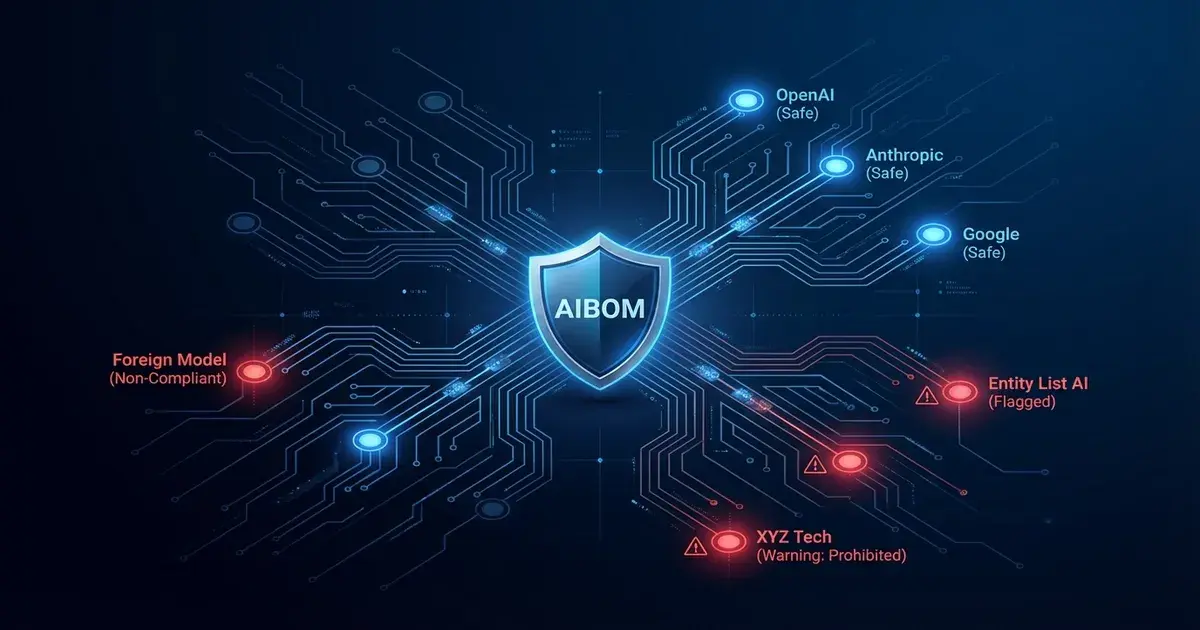
They lead with their AI inventory
Instead of waiting for the security questionnaire and scrambling to answer it, they proactively share an AI provider and model inventory during the sales process. Before the buyer even asks.
“Here’s every AI model in our product, which provider runs it, what data it touches, and what controls we have around it.”
That single document — usually two pages — does more for deal velocity than a dozen feature demos. It tells the buyer’s security team: these people know what they’re running and they’re not hiding anything.
They map to frameworks the buyer already trusts
NIST AI RMF. ISO 42001. EU AI Act risk classification. These aren’t academic exercises — they’re the specific frameworks enterprise procurement teams are evaluating against.
When your governance documentation maps your controls to NIST AI RMF functions or EU AI Act risk categories, you’re speaking the buyer’s language. You’re making their job easier. And a buyer whose job you make easier is a buyer who closes faster.
They show gaps honestly
This one surprises people. The startups winning the most trust aren’t the ones claiming perfect compliance. They’re the ones who say: “Here are our 48 controls. 30 are fully mapped. 13 are partially addressed. 5 are gaps we’re working on with a 30/60/90 remediation plan.”
Buyers don’t expect perfection from a Series A startup. They expect transparency and a credible plan. Pretending you have no gaps is a red flag. Showing a prioritized remediation roadmap is a trust signal.
They pre-answer the hard questions
Enterprise due diligence questionnaires are predictable. The questions about AI governance fall into roughly the same patterns across buyers. Things like:
- How do you maintain an inventory of AI/ML models used in your product?
- What is your process for evaluating new AI providers?
- How do you handle customer data that flows through third-party AI APIs?
- What controls exist for AI output validation?
- How do you monitor for model drift or degradation?
If you’ve already written strong answers to these — backed by scan evidence from your actual codebase — you can respond to a 27-question AI due diligence section in hours instead of weeks. I’ve seen this single capability cut questionnaire response time by 60-80%.
The Numbers That Should Get Your Attention
This isn’t soft advice. The impact is measurable.
Deal velocity. Startups that proactively share governance documentation during sales see shorter security review cycles. The buyer’s team doesn’t need to chase missing information. The follow-up questions are narrower. The review moves to approval faster.
I talked to a CTO last month who told me their average time-to-close on enterprise deals dropped from 90 days to 60 after they started including an AI governance brief in their security packet. That’s not because governance magically removed other friction — it’s because it eliminated the two-week security review delay where the buyer’s team was waiting for information the startup didn’t have ready.
Win rate on security-sensitive deals. When two vendors are technically equivalent and one has a governance brief mapped to NIST AI RMF while the other has nothing, who do you think the CISO recommends? It’s not even close.
The CISO’s job is risk management. When they evaluate two vendors and one hands over an AI inventory with framework-mapped controls and the other says “we’ll get back to you” — the first vendor just made the CISO’s life easier. That’s how you earn an internal champion who advocates for your deal in procurement meetings you’ll never be invited to.
Expansion and renewal. Once you’re in the door, your governance posture becomes a retention asset. When the customer’s compliance team does their annual vendor review, you’re the vendor with documentation already on file. You’re easy to re-approve. Your competitors — the ones without governance docs — face a full evaluation every cycle.
This compounds over time. Year one, you pass the initial security review. Year two, you sail through the annual reassessment in a day because your docs are current and your delta report shows progress. Year three, the buyer’s team starts using your governance documentation as the example of what they expect from other vendors. You’ve set the bar. That’s a moat.
Fundraising. VCs talk to each other. When your Series B investors see a clean AI risk posture during diligence, that signal travels. It doesn’t show up on a spreadsheet, but it shows up in the speed of the round. And in a market where AI regulation is the headline every other week, showing you’ve already handled it proactively tells investors you’re ahead of the curve — not scrambling to catch up.
How to Start (Without Hiring a Compliance Team)
You don’t need a GRC department. You need four things, and you can build them faster than you think.
1. Scan your codebase. Get an actual inventory of every AI SDK, model reference, and provider dependency in your code. Not what you think is there — what’s actually there. Most CTOs I talk to are surprised by what a scan turns up. Models they forgot about, SDKs a contractor added six months ago, API keys to providers they didn’t know they were using.
2. Map risks to frameworks. Take your AI inventory and map each detection against NIST AI RMF, ISO 42001, and the EU AI Act. Where do you have controls? Where are the gaps? This mapping is what turns a list of AI dependencies into a governance artifact that buyers recognize.
3. Build your response kit. Pre-write answers to the 25-30 most common AI due diligence questions. Back each answer with evidence from your scan — specific code references, specific controls, specific framework mappings. Confidence-tag each answer: fully evidenced, partially addressed, or needs review.
4. Lead with it in sales. Don’t wait for the security questionnaire. Share your AI governance brief during the first or second call. “Before you ask — here’s our AI inventory, risk assessment, and control mapping. Happy to walk through it.” Watch the buyer’s face change.
The startup that hands over governance documentation before it’s asked for signals something powerful: we’ve thought about this, we’re not afraid of scrutiny, and we’re easy to work with.
Is This a Tagline or a Blog Post?
I’ve been turning this phrase over in my head: Turn AI governance into a competitive advantage.
It started as a blog title. But the more I think about it, the more I think it’s the whole thesis. It’s what SaaSVista does. It’s why we exist. We don’t help startups check compliance boxes. We help them turn trust into revenue.
Every startup I work with that gets this right tells me the same thing: “I wish I’d done this six months ago.” Not because governance is fun. Because the deals they were losing — the ones that stalled in security review, the ones where procurement went dark — started closing.
AI governance isn’t the price of doing business. It’s the reason you win the business.
Key Takeaways
- Enterprise buyers evaluate AI governance as seriously as they evaluate your product — sometimes more seriously
- The startups winning enterprise deals proactively share governance documentation before it’s requested
- Mapping your controls to NIST AI RMF, ISO 42001, and EU AI Act speaks the buyer’s language and speeds reviews
- Showing gaps with a remediation plan builds more trust than claiming perfection
- Pre-answering the 25-30 most common AI due diligence questions can cut questionnaire response time by 60-80%
- You don’t need a compliance team — you need a codebase scan, framework mapping, and the willingness to lead with transparency
- AI governance isn’t a cost center. It’s a trust signal that shortens sales cycles, improves win rates, and makes renewals easier
Mike Carroll
Founder & Field CTO at SaaSVista
30+ years in IT security and infrastructure. Previously CISSP certified, 2004-2022. Helping B2B SaaS startups prove AI governance readiness to enterprise buyers.