
The $340M AI Governance Market: Why Startups Are Next
Here’s a number that should get your attention: Gartner projects $492 million in AI governance spending in 2026 alone, surpassing $1 billion by 2030. Forrester’s broader definition reaches $15.8 billion by 2030. Even the most conservative estimate (Grand View Research) projects $3.6 billion by 2033 at 36% CAGR.
That’s 30-45% annual growth depending on who you ask. Massive. And right now, almost every dollar of it is flowing to enterprise solutions built for companies with dedicated GRC teams and six-figure compliance budgets.
Nobody’s building for startups.
I’ve spent 30 years in IT security. I’ve watched this exact pattern play out three times — network security, cloud security, data privacy. Every time, the market starts with expensive enterprise tools, ignores smaller companies for years, and then someone figures out how to serve the underserved segment. That someone usually wins big.
The AI governance cycle is running the same playbook, except faster.
The Market Right Now: Enterprise Tools or Nothing
Look at what’s available today. You’ve got enterprise GRC platforms bolting on AI modules. You’ve got Big Four consulting firms charging $200K+ for AI risk assessments. You’ve got manual spreadsheet exercises that take months.
For a 50-person startup burning through Series B funding? None of that works.
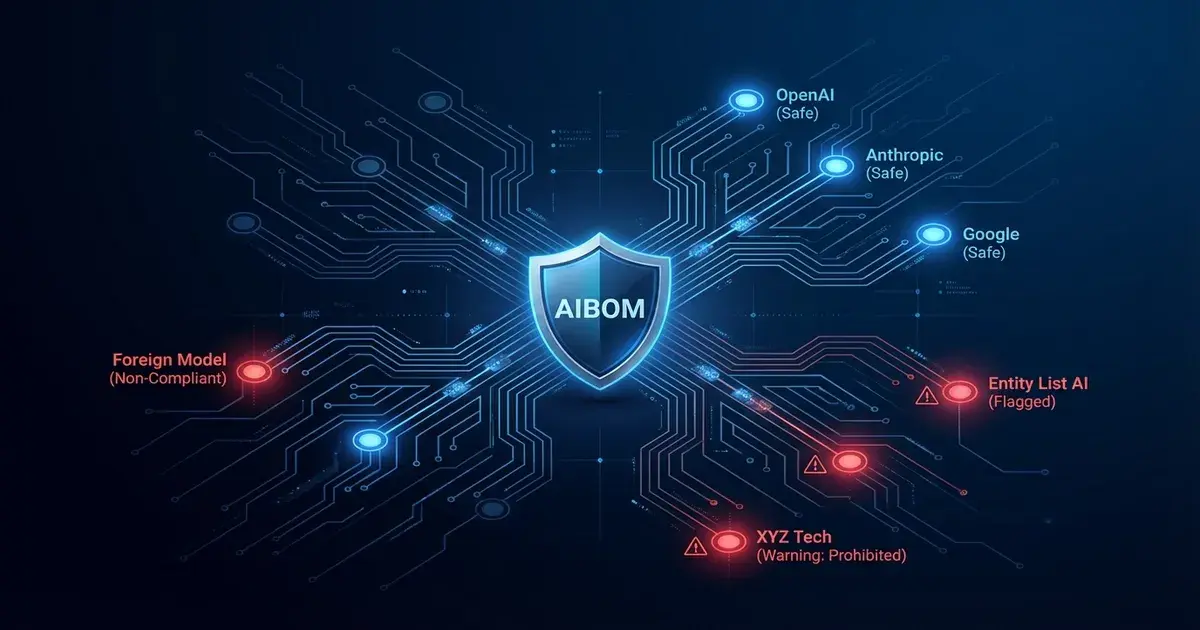
Vanta and Drata are great at what they do — SOC 2 automation, compliance dashboards, audit prep. But they don’t solve the AI-specific problem. They don’t scan your codebase for AI SDKs. They don’t map OpenAI and Anthropic integrations to NIST AI RMF controls. They don’t tell you which of your fifteen AI dependencies creates a data residency risk.
There’s a gap in the market you could drive a truck through.
Why Startups Are the Underserved Segment
This isn’t an accident. Enterprise vendors go where the money is — large contracts, long sales cycles, procurement teams that can cut six-figure checks. That’s rational.
But it creates a massive blind spot.
Startups are adopting AI faster than anyone. Your average Series A company has three to five AI providers woven into their product already — OpenAI for generation, Anthropic for classification, maybe Hugging Face for embeddings, AWS Bedrock for something else. Engineers add these dependencies the same way they add npm packages. Nobody’s tracking them.
And here’s the thing — these same startups are selling into enterprises. They’re filling out security questionnaires. They’re going through vendor risk reviews. And enterprise buyers have started asking AI-specific questions:
- What AI models does your product use?
- How do you handle data that flows through third-party AI APIs?
- What’s your AI risk assessment process?
If you can’t answer those questions, deals stall. I’ve watched it happen dozens of times from the buyer’s side of the table. The startup has the better product — genuinely better — but they can’t get through the security review because they don’t have basic AI governance documentation.
The Series A-C Pressure Cooker
Here’s what makes this moment different from cloud security or data privacy.
Startups are simultaneously dealing with three pressures that didn’t used to converge at the same time:
Enterprise buyers demanding AI governance. Security questionnaires have expanded. Buyers who were satisfied with SOC 2 and a pen test report 18 months ago are now asking about AI inventories, risk maps, and control documentation. That’s a new gate in the sales cycle — and it’s showing up earlier than anyone expected.
AI adoption running ahead of controls. Engineers are shipping AI features fast. That’s the job. But nobody’s documenting which models they’re using, what data flows where, or what happens when a provider changes their terms. The governance gap grows with every sprint.
Investors adding AI risk to due diligence. VCs at the Series B and C stage are asking about AI risk controls now. An investor who doesn’t ask is the exception. If diligence turns up a dozen AI providers with no inventory and no documentation, that’s a finding. Findings slow rounds. Sometimes they kill them.
Three forces. Same company. Same quarter. That’s the pressure cooker.
What “Startup-Grade” AI Governance Actually Looks Like
It doesn’t look like an enterprise GRC platform. It doesn’t look like a $150K consulting engagement. It doesn’t look like a 200-page policy binder nobody reads.
It looks like this:
Fast. Days, not months. Scan the codebase, detect AI dependencies, map to controls, produce documentation. The AI inventory problem — the thing blocking everything downstream — should take minutes.
Evidence-based. Start from what’s actually in the code, not what someone thinks is in the code. I’ve never once seen a startup where the engineering team’s mental model of their AI dependencies matched reality. There are always surprises — abandoned SDKs, test integrations that went to production, providers nobody remembered adding.
Affordable. A governance solution for startups can’t cost more than the AI APIs themselves. We’re talking hundreds per month, not tens of thousands. The economics have to make sense for a company watching its runway.
Mapped to frameworks that matter. NIST AI RMF, ISO 42001, EU AI Act. Not because startups love frameworks — because their buyers and investors reference these frameworks in questionnaires and due diligence checklists. You need to speak the language.
That’s it. Nothing fancy. Just the operational discipline of knowing what AI you use, what risks it creates, and what you’re doing about it — with evidence to back it up.
Why the Window Is Right Now
Three reasons this moment won’t last.
The EU AI Act is in enforcement. Not “coming soon.” Not “proposed.” Enforcement phase. If you sell into European markets — or your customers do — risk classification requirements apply. The ripple effect is already hitting US startups through their enterprise customers’ supply chain requirements.
Enterprise buyers are evolving fast. Eighteen months ago, AI governance questions were rare in security reviews. Now they’re standard. In another eighteen months, buyers won’t just want documentation — they’ll want automated evidence. The bar is going up, not down.
Investor scrutiny is intensifying. The AI governance market projections aren’t abstract. VCs read the same market reports. They know that a portfolio company without AI governance is a portfolio company with unquantified risk. That conversation is getting harder, not easier.
The companies that build their AI governance posture now — while the bar is still “show us you’ve thought about this” instead of “show us your certified program” — get ahead of the curve at a fraction of the cost.
The companies that wait will do it under pressure, with a deadline, at three times the price. I’ve seen that movie. It doesn’t end well.
Be One of the First
The AI governance market is real — $492 million in 2026 (Gartner), growing to $3.6-15.8 billion by 2030-2033 (Grand View Research, Forrester). The growth trajectory is backed by regulatory pressure, buyer behavior, and investor expectations that aren’t going away.
Right now, the startup segment of that market is wide open. The companies that move first don’t just get compliant — they get a competitive advantage. When your competitor can’t answer the AI governance questions on a security questionnaire and you can, you win the deal.
That’s not a theoretical benefit. That’s pipeline.
SaaSVista is building AI governance specifically for startups — codebase scanning, AI inventory, risk mapping, and governance documentation you can hand to a buyer in days, not months.
If you’re a startup using AI in your product and selling to enterprises, you’re going to need this. The only question is whether you build the story now — or scramble later.
Mike Carroll
Founder & Field CTO at SaaSVista
30+ years in IT security and infrastructure. Previously CISSP certified, 2004-2022. Helping B2B SaaS startups prove AI governance readiness to enterprise buyers.